
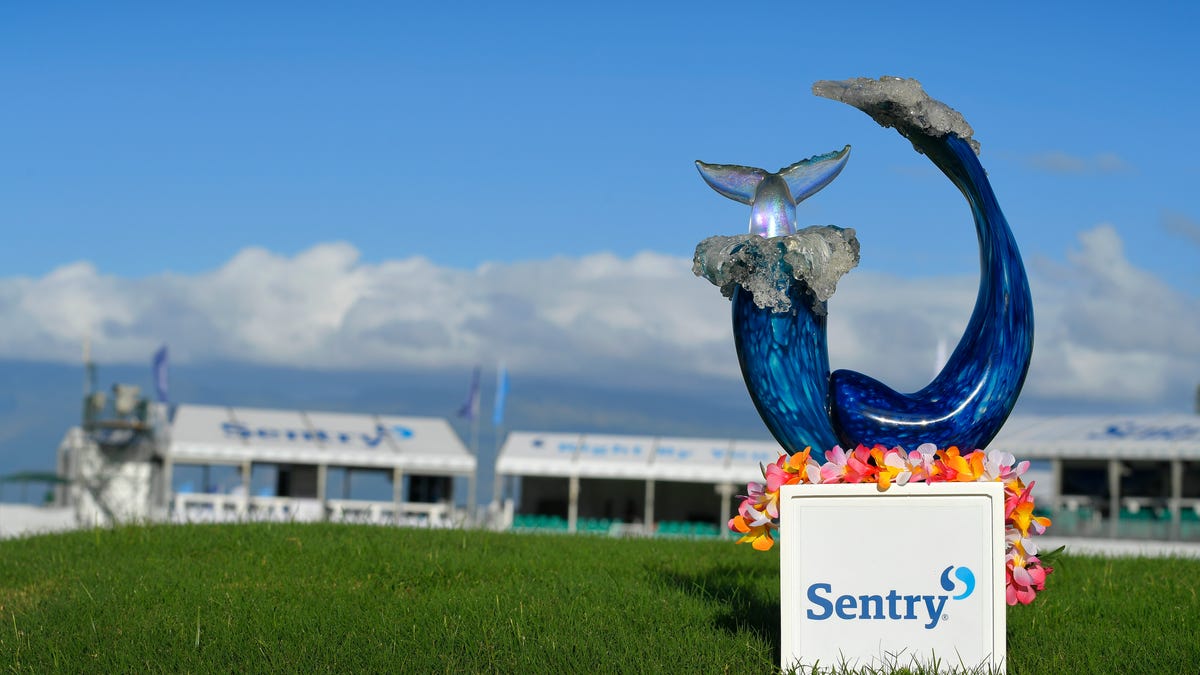
Part III of a series on the PGA Tour and its future in Hawaii
(Editor’s Note: The Sentry was supposed to be played this week at Kapalua Resort’s Plantation Course, but the event was canceled because of water issues affecting the condition of the course in September last year. Despite the uncertainty surrounding the water restrictions, the resort managers have returned the course to competitive playing conditions. This is the third part of a series by Golfweek.com explaining the situation in Hawaii.)
Mark Rolfing sounded the alarm early that there was trouble in paradise.
It happened during a four-hour meeting with members of the PGA Tour staff during the week of Players Championship in March. Rolfing, a longtime NBC/Golf Channel analyst, lives in Maui on Kapalua’s Bay Course, the sister course to Kapalua’s Plantation Course that has served as the annual host of the Tour’s kickoff event – now known as The Sentry – and is a paid ambassador for the event that he has been intimately involved in since the beginning.
He shared that drought concerns in West Maui and water conservation mandates put into practice to ensure water was available to a community in need could negatively impact staging the tournament and he turned out to be prescient: the local water crisis is in litigation and the Tour eventually announced on Sept. 16 that the Sentry wouldn’t be played there this year.
“I said, ‘Potentially we have a problem unfolding here,’ ” Rolfing recounted. “You guys really need to pay attention.”
But did anyone listen?
The Tour didn’t make anyone available for this story and is sticking to its previous statement, which included that “the course’s agronomic conditions were severely impacted by the drought and water restrictions.” The Hawaii Water Service started sending regular notices of Tier 4 water curtailments in March. Under Tier 4, non-potable water use is exclusively limited to fire protection purposes.
The Tour’s agronomy team typically relies on its counterparts at the host facility throughout the year and has several touchpoints to track the course’s condition. Alex Nakajima, Kapalua’s general manager, said he had bi-weekly and monthly catch-up calls with the various stakeholders. That included Sentry executive director Max Novena, a vice president at the Tour in its championship management division, whose home on the island is located along the Plantation Course and who could see first-hand the browning of the course when restrictions were placed on the watering of the course.
As early as the spring, the Tour did inform the tournament title sponsor of the lack of rain that West Maui was experiencing and were aware of the ramifications and monitoring the situation but continued to assure Sentry that the course would be fine. That changed in mid-August when the water supply was cut off completely. Two weeks later the course was as dry as a bone and dying.
As standard operating procedure, the Tour conducts a site visit eight weeks out to assess and file a report, unless circumstances dictate the need for an interim visit. Given the dire situation in Maui, the Tour’s head agronomist, Paul Vermillion stepped in for Mike Crawford, who has been responsible for the Sentry for the last several years according to Nakajima. Vermillion traveled to Kapalua on Sept. 3 to make an emergency inspection.
Less than two weeks later, the Tour announced that the Sentry wouldn’t be staged at the Plantation Course.
“Nobody had come for three or four months after I sounded the alarm,” Rolfing said. “I live here and have been at this tournament for 40 years. I know enough to know that we were really headed for trouble. I couldn’t get anybody’s attention. I even called (original course architects) Bill Coore and Ben Crenshaw. And I monitored it very closely, even to the point where I talked to Mike Crawford, the Tour agronomist, as late as July and he told me everything was fine.”
What is left unsaid because Rolfing isn’t the type to point fingers is this: Could Kapalua owner TY Management Corporation, led by Tadashi Yanai, the founder of the company that owns clothing retailer Uniqlo and second-wealthiest man in Japan, Troon Golf, the operator of the resort’s courses, or the Tour, have done more and sooner? Given that 16 holes of the Plantation course re-opened for play on Nov. 10 – and it has been deemed in “tour-caliber condition” to hold the tournament this week – did the Tour make a premature decision?
Nakajima chuckled at this question because he’s been asked it so many times. He explained the various factors, including that the Hawaiian Islands are one of the most remote island chains and that everything for the tournament build-out had to be on boats by Oct. 1. No one knew if they would have the ability to water the course at all. [Kapalua eventually opted to take its water rations from the Bay Course and give it completely to the Plantation and let the Bay go.] “They waited to the last minute and made the only call they could,” Nakajima said. “I don’t blame them at all.”
Then the focus shifted to trying to find a replacement site. Efforts to keep the tournament in Hawaii were explored. Royal Kaanapali on Maui is just down the road and once hosted a PGA Tour Champions stop but it was deemed too short by modern standards. King Kamehameha Golf Club, a private club on Maui with a beautiful Frank Lloyd Wright clubhouse, also was under consideration but didn’t pan out. They considered playing consecutive weeks at Waialae Country Club on Oahu, the home of the Sony Open in Hawaii. Several options in California and Florida, including Trump Doral, were vetted but the right course and right date didn’t align.
“The Sentry is a jewel in the PGA Tour schedule,” said Stephanie Smith, chief marketing and brand officer and chief golf partnership officer at Sentry. “We were determined to find a way to play a signature-level event in 2026 — one that honored the tournament’s tradition and provided the quality of competition that players and fans have come to expect. Despite the tour’s best efforts, it became impossible to do that. Sentry is committed to our long-term relationship with the tour … and The Sentry’s place as a prominent event.”
As soon as the Tour announced in October that there would be no Sentry to kick off the new year, the Wisconsin-based insurance company pledged to send a contingent to Kapalua to “give Maui a hug,” along with checks totaling $1 million to several local charities. But with the clock-ticking until next year’s tournament, uncertainty remains for the tournament’s future at Kapalua’s Plantation Course. Sentry’s Smith declined to speak on the record to Golfweek but she did say this to Wisconsin.Golf: “I’m confident the tournament will be back in 2027. I can’t say with certainty where.”
Next: What is the future of the Hawaii Swing?