
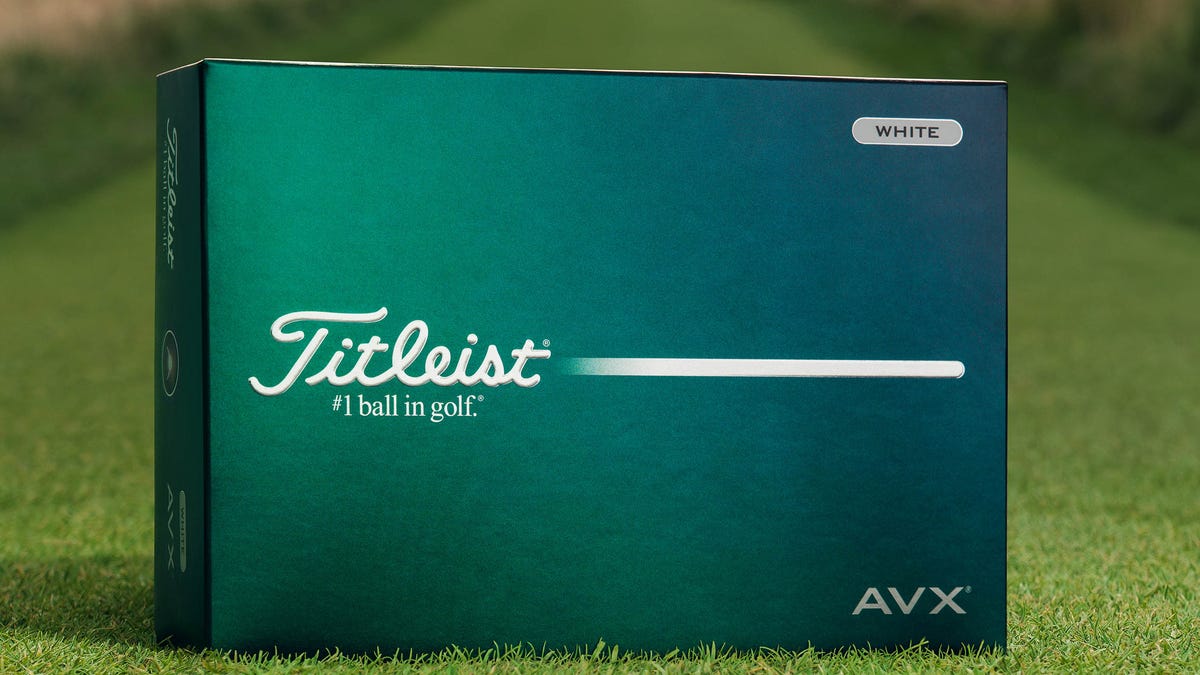
The 2026 Titleist AVX keeps its low-flight, soft-feel DNA while adding ball speed and improved greenside spin for better all-around performance.
Gear: Titleist AVX (2026)
Price: $49.99 per dozen
Specs: Three-piece construction with rubber core, casing layer and urethane cover; available in white and yellow
Available: January 21
Who it’s for: Golfers who want a softer-feeling, Tour-caliber ball that flies lower off the tee and produces less long-game spin without giving up the urethane feel and short-game control.
What you should know: The 2026 AVX maintains its signature soft feel, low-spin and lower-flight but adds more speed off the tee and enhanced greenside spin.
The Deep Dive: Ever since Titleist introduced AVX in 2017 as a softer, lower-spinning alternative to Pro V1, it has built a loyal following. While Pro V1 and Pro V1x continue to dominate counts on the PGA Tour, LPGA and DP World Tour, along with elite amateur events like the NCAA Championships and U.S. Amateur, AVX has carved out its own lane for golfers who wanted solid distance, softer feel and a flatter trajectory off the tee without sacrificing urethane performance around the greens. In Titleist surveys, many AVX players describe it as the ball that “gives them a little of their distance back” without changing how they swing.
The challenge with updating AVX, according to Titleist, is that the middle-iron flight and soft feel are non-negotiable. Players choose AVX because it launches lower with the driver and then climbs beautifully through the middle of the bag, where that soft-compression engine really shines. The company’s guiding principle in creating the 2026 update was simple: enhance performance without disrupting what makes AVX unique.
To accomplish that, Titleist reformulated the core to be faster without making it firmer. That’s a neat trick because typically, to make a ball faster, brands make the core firmer, which can increase spin and alter the feel. That would go against the goal of AVX, and target players would notice it immediately. Instead, the speed gains come from changes to the chemistry and materials inside the core.
The casing layer has also been made slightly thinner, allowing the cast-urethane cover to grow thicker and softer. That change may sound subtle, but it matters. A softer, more substantial cover helps wedges and short irons “grab” the ball more effectively, adding more greenside spin than the previous AVX while preserving long-game speed.
The aerodynamic package on the AVX still produces a lower flight. Golfers should expect a more penetrating launch off the tee compared to Pro V1 and Pro V1x, and the updated construction discourages that flight from ballooning in the wind. So, players who generate too much spin with V1 or V1x, or who shape shots more than they’d like, may find AVX helps them hit with less curve.
The updated AVX is not going to out-spin Pro V1 around the greens, but this generation closes the gap slightly without walking away from what makes the ball appealing. If anything, Titleist reinforced the line’s strengths by adding a touch more scoring-club precision while protecting the distance and feel that AVX players treat almost like a secret weapon.
The bottom line: For golfers who value soft feel, prefer a lower flight window with the driver, or simply want to keep Father Time from taking too many yards off their mid-irons, the updated AVX remains an appealing fit that still provides solid short-game control.